Business Travel Hotels Smart Choices for the Modern Traveler
Business travel hotels are more than just a place to sleep; they’re strategic hubs for productivity and comfort. This guide explores the key factors to consider when choosing a business travel hotel, from essential amenities and convenient locations to pricing strategies and loyalty programs. We’ll delve into what makes a hotel truly business-friendly, helping you make informed decisions that optimize your travel experience and maximize your time.
We’ll cover everything from the must-have amenities like high-speed internet and well-equipped business centers to the importance of location and accessibility for both individuals and those with disabilities. We’ll also examine how to navigate pricing and value, decipher online reviews, and leverage corporate rates and loyalty programs to get the most out of your business trips. Get ready to transform your business travel experience!
Hotel Amenities for Business Travelers: Business Travel Hotels
Source: itilite.com
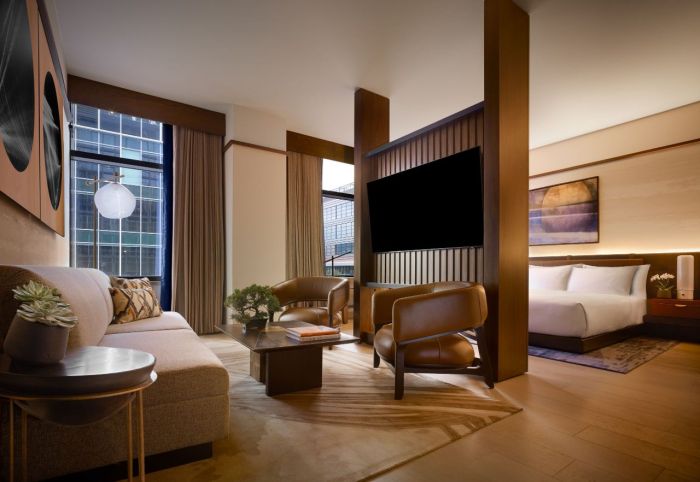
Choosing the right hotel for business travel is crucial for productivity and overall well-being. The right amenities can significantly impact a business trip’s success, contributing to a more comfortable and efficient stay. This section will explore the key amenities business travelers value and how these differ across various hotel price points.
Top Five Desirable Amenities for Business Travelers
Business travelers prioritize amenities that support their work and help them maintain a balance between professional and personal needs. The following five consistently rank highly:
- High-speed, reliable internet access: Essential for communication, data transfer, and remote work.
- Ergonomic workspace: A comfortable desk and chair are vital for extended periods of work.
- Meeting/conference facilities: Access to meeting rooms or collaborative spaces is often required for business dealings.
- Fitness center: Maintaining a fitness routine is important for many travelers, promoting health and well-being.
- Business center services: Printing, copying, and faxing capabilities are still highly valued by many business travelers.
Comparison of Amenities Across Hotel Price Points
Luxury business hotels typically offer a significantly more extensive range of amenities compared to budget-friendly options. While budget hotels prioritize affordability, focusing on the essentials, luxury hotels aim for exceptional comfort and convenience, often including personalized services. Mid-range hotels fall between these two extremes, providing a balance of value and amenities.
High-Speed Internet Access and Guest Satisfaction
Reliable and fast internet is paramount for modern business travelers. Slow or unreliable internet can severely disrupt work, leading to missed deadlines, lost productivity, and frustrated guests. Hotels that prioritize high-speed internet access, with sufficient bandwidth to handle multiple devices and applications, significantly improve guest satisfaction and receive higher ratings. For example, a hotel with consistently fast Wi-Fi might receive overwhelmingly positive reviews compared to one with spotty connectivity, even if other amenities are similar.
Amenities Comparison Table
The following table compares amenities across three hotel price points: budget, mid-range, and luxury.
| Amenity | Budget | Mid-Range | Luxury |
|---|---|---|---|
| High-speed Wi-Fi | Basic, may have limitations | Reliable, usually included | High-speed, multiple devices supported, potentially premium options |
| Workspace | Small desk, basic chair | Adequate desk and chair | Ergonomic workspace, large desk, comfortable chair, excellent lighting |
| Fitness Center | May not be available | Basic gym equipment | State-of-the-art fitness center, potentially with personal trainers |
| Business Center | May not be available, limited services | Basic printing and copying services | Full-service business center, including meeting rooms, secretarial services |
Location and Accessibility

Source: startuptalky.com
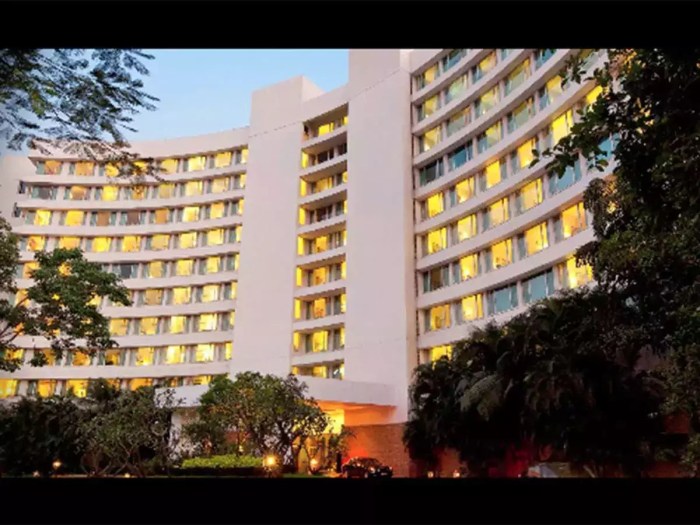
Choosing a hotel for business travel often hinges on more than just comfortable beds and a nice gym. Location and accessibility are paramount, directly impacting a traveler’s productivity and overall experience. A poorly situated hotel can lead to wasted time, increased stress, and ultimately, a less successful trip.
Location factors significantly influence business travelers’ hotel selections. Convenience is key; travelers want easy access to meeting venues, client offices, and other relevant business destinations. Proximity to reliable and efficient transportation networks is also critical, minimizing travel time and maximizing efficiency. Hotels strategically placed near business districts, convention centers, or major transportation hubs often command higher prices, reflecting their desirability.
Proximity to Transportation Hubs
The importance of proximity to airports and train stations cannot be overstated. A short commute minimizes travel stress and allows business travelers to maximize their time. Direct access to public transportation, such as subway lines or bus routes, further enhances convenience and reduces reliance on taxis or ride-sharing services, saving both time and money. Consider the time saved: a 15-minute taxi ride versus a 1-hour journey in rush hour traffic can dramatically alter a business traveler’s schedule.
Examples of Strategically Located Hotels
Many hotels in major cities understand this need and position themselves accordingly. For example, in New York City, hotels near Grand Central Terminal or Penn Station offer easy access to multiple transportation options and are often chosen by business travelers. Similarly, hotels near major airports like Heathrow in London or Charles de Gaulle in Paris cater specifically to international business travelers needing convenient access to flights. In Chicago, hotels near Union Station provide convenient access to both rail and public transportation, benefiting those travelling throughout the Midwest and beyond.
Accessibility for Business Travelers with Disabilities
Hotels should prioritize accessibility to ensure all business travelers have a comfortable and productive stay. Failing to do so can lead to negative reviews, legal issues, and lost business.
- Wheelchair Accessibility: Ramps, elevators, and appropriately sized doorways and hallways are crucial for wheelchair users. Bathrooms should also be designed with sufficient space for maneuvering and appropriate grab bars.
- Accessible Rooms: Hotels must offer rooms with features like lowered countertops, roll-in showers, and accessible light switches and electrical outlets.
- Assistive Listening Devices: Provision of assistive listening devices in meeting rooms and other public areas caters to guests with hearing impairments.
- Visual Aids: Clear signage, braille markings, and visual cues are essential for visually impaired guests.
- Service Animal Accommodation: Hotels must clearly communicate their policies on accommodating service animals and ensure appropriate spaces are available.
Business Services and Facilities

Source: dreamstime.com
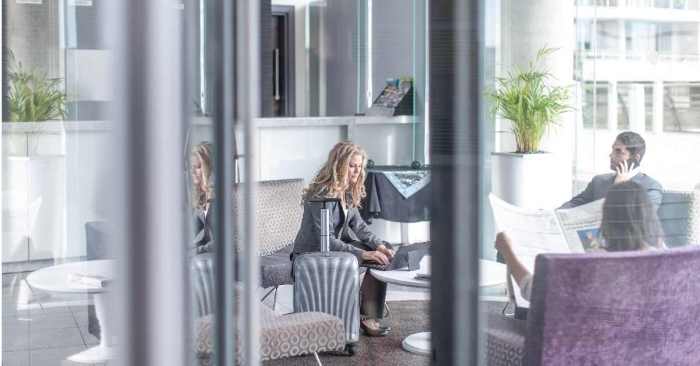
Finding the right hotel for business travel often hinges on the availability and quality of business services. A well-equipped hotel can significantly boost productivity and make a trip much smoother. Let’s explore what business travelers can expect from modern hotels.
Many hotels offer a range of business-oriented amenities designed to cater to the needs of corporate travelers. These go beyond just a comfortable room and often include dedicated spaces and services to help professionals stay connected and productive while away from their offices.
Examples of Business-Oriented Hotel Services, Business travel hotels
Hotels provide various business services, such as meeting rooms of different sizes to accommodate various group sizes, from small boardroom-style meetings to larger conferences. Business centers typically offer services like printing, copying, faxing, and high-speed internet access. Some hotels even provide secretarial support, translation services, and on-site IT support. Many upscale hotels also offer dedicated concierge services to assist with business-related tasks.
Comparison of Business Center Offerings: Two Hotel Brands
Let’s compare the business center offerings of two hypothetical hotel brands, “Hotel A” and “Hotel B.” Hotel A, a budget-friendly chain, offers a basic business center with computers, printers, and Wi-Fi access. The cost is included in the room rate, but the equipment might be older and the space could be somewhat cramped. Hotel B, a luxury brand, provides a state-of-the-art business center with high-end computers, high-speed internet, printing, scanning, faxing, and even a dedicated staff member to assist with tasks. This service comes at an additional cost, but the superior quality and convenience are worth it for many business travelers.
Features of an Ideal Business Center for Corporate Travelers
An ideal business center for corporate travelers should offer several key features. High-speed, reliable internet is paramount. Access to printers, scanners, and copiers with various paper sizes and finishing options is also crucial. Ergonomic workstations with comfortable chairs are essential for prolonged work sessions. The center should be well-lit and quiet to provide a conducive work environment. 24-hour access would be a significant benefit, especially for travelers working across different time zones. Finally, readily available technical support and helpful staff add considerable value.
Business Services Table
| Service | Description | Cost | Availability |
|---|---|---|---|
| Meeting Room Rental | Various sizes available, equipped with projectors, screens, and audio-visual equipment. | Varies depending on size and duration; typically hourly or daily rates. | On request, subject to availability. |
| Business Center Access | Computers, printers, scanners, copiers, high-speed internet access. | May be included in room rate or charged separately. | Typically 24/7. |
| Printing/Copying/Faxing | Per-page charges for printing, copying, and faxing services. | Varies depending on the hotel and type of service. | Business center hours. |
| Secretarial Services | Typing, transcription, and other administrative support. | Hourly or per-task charges. | On request, subject to availability. |
Pricing and Value for Money

Source: businesshotels.com
Business travel hotels understand that price is a major factor for corporate clients and individual business travelers. They employ various pricing strategies to attract this lucrative market segment, balancing profitability with competitive pricing. Understanding these strategies is key to securing the best value for your travel budget.
Pricing strategies often involve dynamic pricing, adjusting rates based on demand, seasonality, and the length of stay. Corporations often negotiate discounted rates for their employees, leveraging volume to secure better deals. Hotels may also offer packages that bundle services like airport transfers, breakfast, or Wi-Fi to increase perceived value and justify higher prices.
Hotel Pricing Strategies for Business Travelers
Business hotels often utilize a tiered pricing system, offering different room types and amenities at varying price points. This allows them to cater to a range of budgets and preferences within the business traveler demographic. For instance, a basic business room might be priced lower than a suite with extra space and amenities. Weekend rates might be lower than weekday rates to fill rooms during periods of lower demand. Corporations frequently negotiate corporate rates, offering significant discounts for large volumes of bookings. These rates are often locked in for a specific period, providing predictability for budgeting purposes.
Factors Influencing Perceived Value for Money
Several factors contribute to a business traveler’s perception of value for money. These go beyond just the nightly rate. Factors such as the quality of the accommodation, the availability of essential amenities (high-speed Wi-Fi, comfortable workspace, fitness center), the location’s convenience, and the overall level of service all play a crucial role. A hotel might charge a premium price but offer exceptional service and amenities, justifying the cost for a business traveler who values efficiency and comfort. Conversely, a lower-priced hotel might lack essential amenities or be inconveniently located, leading to a perception of poor value despite the lower cost.
Comparison of Pricing Models: Two Competing Hotels
Let’s compare Hotel A and Hotel B, two competing business hotels in a major city. Hotel A, a luxury establishment, charges $300 per night for a standard room. This includes complimentary breakfast, high-speed Wi-Fi, a fitness center, and access to an executive lounge. Hotel B, a mid-range option, charges $150 per night for a comparable room. However, it only includes Wi-Fi and charges extra for breakfast and access to a business center. While Hotel B is significantly cheaper, the added costs of amenities may make the overall value comparable or even less than Hotel A for a business traveler prioritizing convenience and efficiency.
Visual Comparison of Price and Amenities
Imagine a bar chart. The horizontal axis represents three hotels: Hotel X (Budget), Hotel Y (Mid-Range), and Hotel Z (Luxury). The vertical axis represents price per night. Hotel X’s bar would be the shortest, representing a price of $100. Hotel Y’s bar would be taller, showing a price of $200. Hotel Z’s bar would be the tallest, representing a price of $350. Now, imagine a second chart alongside the first. This chart represents amenities offered, using icons for clarity. Hotel X would have only a few icons (Wi-Fi, basic breakfast), Hotel Y would have more (Wi-Fi, enhanced breakfast, small fitness center), and Hotel Z would have the most icons (Wi-Fi, full breakfast, large fitness center, executive lounge, airport shuttle). This visual representation allows for a quick comparison of price versus the number and quality of amenities provided by each hotel.
Guest Reviews and Reputation

Source: appypie.com
Guest reviews are crucial for business travelers choosing a hotel. They offer firsthand accounts of the hotel’s suitability for professional trips, going beyond the marketing materials. Understanding what past guests highlight – both positive and negative – can significantly impact your decision-making process.
Key Aspects of Guest Reviews for Business Travelers
Business travelers prioritize different aspects compared to leisure travelers. Key elements often mentioned in reviews include reliable Wi-Fi, comfortable workspaces (desk, ergonomic chair), quiet rooms conducive to concentration, efficient check-in/check-out processes, and proximity to business districts or transport links. Reviews also often reflect the quality of business services offered by the hotel, such as meeting rooms and printing facilities. The overall cleanliness and safety of the hotel are, of course, always important considerations.
Examples of Positive and Negative Reviews and Their Impact
A positive review might state: “Excellent hotel for business travelers! The Wi-Fi was super fast and reliable, the room was quiet, and the location was perfect for my meetings downtown. The staff were also very helpful and professional.” This review would likely encourage bookings. Conversely, a negative review could say: “Terrible Wi-Fi, constantly dropping out. The room was noisy, making it impossible to work. The breakfast was a disaster.” This would likely deter potential guests, especially those prioritizing reliable internet and quiet workspaces.
Analyzing Online Reviews to Assess Hotel Suitability
To effectively analyze reviews, focus on recurring themes. Don’t just read a few reviews; scan many to identify consistent positive and negative feedback. Look for patterns. For example, if multiple reviews mention slow Wi-Fi or unhelpful staff, it’s a serious red flag. Pay attention to the reviewer’s profile – frequent travelers often provide more insightful and reliable reviews. Consider the overall rating and the number of reviews; a high average rating with a large number of reviews indicates a more reliable assessment.
Sample Guest Review Highlighting Aspects Valued by Business Travelers
“This hotel exceeded my expectations for a business trip. The high-speed, reliable Wi-Fi was essential for my work, and the quiet room allowed me to focus. The comfortable workspace was a plus, and the proximity to the conference center saved me valuable time. The staff were professional and efficient, ensuring a smooth check-in and check-out process. The breakfast offered a good selection of healthy options, fueling me for a productive day. I would highly recommend this hotel to other business travelers.”
Loyalty Programs and Corporate Rates
Source: chromeoslounge.com
Frequent business travel can be demanding, but smart use of hotel loyalty programs and corporate rates can significantly ease the burden and boost your savings. These programs offer a range of benefits designed to make your trips smoother and more cost-effective. Understanding how they work is key to maximizing your return.
Hotel Loyalty Program Benefits for Business Travelers
Hotel loyalty programs offer a compelling package of perks tailored to the needs of frequent travelers. Points accumulation allows for free or discounted stays, a significant benefit when traveling frequently for work. Beyond points, many programs provide complimentary upgrades, early check-in/late check-out options, and access to exclusive lounges offering complimentary food and beverages, making long layovers more comfortable. These benefits translate directly into increased productivity and reduced travel stress. Elite status, achieved through accumulating points or stays, unlocks even greater perks, including guaranteed room availability and personalized service.
Comparison of Two Hotel Loyalty Programs
Let’s compare Marriott Bonvoy and Hilton Honors, two major hotel loyalty programs. Marriott Bonvoy boasts a vast global portfolio, including luxury brands like Ritz-Carlton, offering more diverse accommodation options. Hilton Honors, while also extensive, tends to focus more on consistent quality across its brands. Both programs offer points redemption for free nights, upgrades, and other perks. However, Marriott Bonvoy often features more lucrative point-earning opportunities through promotions and partnerships, while Hilton Honors might offer a simpler points system and easier redemption process. The “best” program depends on individual travel patterns and preferences; a traveler frequently using luxury hotels might prefer Marriott Bonvoy, while someone prioritizing consistency and ease of use might favor Hilton Honors.
Obtaining Corporate Rates for Business Travel
Securing corporate rates involves contacting the hotel directly or working through a travel management company (TMC). Directly contacting the hotel’s sales department is usually the most effective method. Provide details of your company, expected travel frequency, and desired room types to negotiate a discounted rate. TMCs, on the other hand, can handle all aspects of your business travel bookings, including securing corporate rates across multiple hotels and managing expenses. They often negotiate bulk discounts that individual travelers can’t access. The process may require providing proof of employment and company details for verification. It’s crucial to negotiate rates well in advance, especially for peak travel periods, to secure the best possible deals.
Booking a Hotel Room Using a Corporate Rate
The process of booking a hotel room using a corporate rate is typically straightforward but involves several key steps.

Final Conclusion

Source: letsflycheaper.com
Selecting the right business travel hotel significantly impacts your trip’s success. By understanding the importance of amenities, location, business services, pricing, reviews, and loyalty programs, you can make choices that enhance your productivity and comfort. Remember to prioritize your needs, research your options thoroughly, and leverage available resources like online reviews and corporate rates to find the perfect hotel for your next business trip. Happy travels!