Discount Hotel Sites Your Guide to Savings
Discount hotel sites have revolutionized how we travel, offering incredible deals and making getaways more accessible than ever. From budget backpackers to luxury travelers, everyone’s looking for a bargain, and these platforms deliver. But navigating the world of discounted hotel rooms requires understanding the various types of sites, their pricing strategies, and the potential pitfalls. This guide will equip you with the knowledge to find the best deals and book your next trip with confidence.
We’ll explore different types of discount hotel sites – metasearch engines, aggregators, and direct booking sites – comparing their strengths and weaknesses. We’ll delve into booking processes, pricing models, and the importance of reading customer reviews. We’ll also discuss the security measures you should look for to protect your personal information and the impact these sites have on the hotel industry itself. Get ready to become a savvy hotel booker!
Popularity and Usage of Discount Hotel Sites

Source: jwplayer.com
The rise of online travel agencies (OTAs) and discount hotel booking websites has fundamentally changed how people plan and book their trips. These platforms offer a vast selection of hotels at competitive prices, making them incredibly popular among a wide range of travelers. This popularity stems from several key factors, and understanding these factors is crucial to comprehending the impact these sites have on the travel industry.
Factors Contributing to the Rise in Popularity of Discount Hotel Booking Websites
Several interconnected factors have fueled the explosive growth of discount hotel booking websites. Firstly, the sheer convenience offered is undeniable. Users can browse thousands of hotels from around the world, compare prices instantly, read reviews, and book their stay all from the comfort of their own homes, eliminating the need for extensive phone calls or in-person visits to travel agents. Secondly, the competitive pricing offered by these sites is a major draw. By aggregating hotel inventory and leveraging their buying power, these platforms often offer discounts and deals that are unavailable through direct booking with hotels. Thirdly, the ease of use and user-friendly interfaces of these websites have made them accessible to a broad audience, regardless of their technical proficiency. Finally, the proliferation of mobile apps has further amplified the accessibility and convenience, allowing users to book hotels on the go.
User Demographics Utilizing Discount Hotel Sites
Discount hotel booking websites cater to a diverse range of users, each with their own specific needs and travel patterns. Budget travelers, particularly students and young professionals, frequently utilize these platforms to find affordable accommodations. Families often use these sites to compare prices and amenities, ensuring they find a hotel that suits their family’s needs within their budget. Business travelers may also utilize discount sites, particularly for shorter trips or when flexibility in location is less critical. While the exact demographics vary by platform, a general trend indicates a broad spectrum of age, income levels, and travel styles using these services. For instance, Expedia reports a user base spanning across various age groups, with significant usage from millennials and Gen Z.
Advantages and Disadvantages of Using Discount Hotel Sites
Using discount hotel booking websites presents several advantages for travelers. The most significant advantage is cost savings. These sites often offer lower prices compared to booking directly with hotels. Furthermore, the convenience of browsing and comparing multiple options in one place is a major benefit. Access to reviews and ratings from other travelers helps users make informed decisions, and the ability to filter searches based on criteria like price, location, and amenities makes finding the ideal hotel much easier.
However, there are also potential drawbacks. While many discount sites offer excellent customer service, some may have limited support or lengthy resolution times for issues. The availability of certain hotels or rooms may be limited compared to direct booking, and sometimes hidden fees or additional charges may arise unexpectedly. Finally, the sheer volume of choices can be overwhelming for some users, leading to decision fatigue. It is crucial to carefully review the terms and conditions before booking and to compare prices across multiple platforms to ensure the best value.
Types of Discount Hotel Sites

Source: tiket.photos
Finding the best hotel deal can feel like navigating a maze, but understanding the different types of discount hotel websites simplifies the process. These sites employ various strategies to offer lower prices, each with its own strengths and weaknesses. Knowing which type best suits your needs is key to scoring a great deal.
Discount hotel websites can be broadly categorized into three main types: metasearch engines, aggregators, and direct booking sites with discounts. Each operates differently, influencing the prices and features offered.
Metasearch Engines
Metasearch engines don’t book hotels directly; instead, they compare prices from multiple sources, including online travel agencies (OTAs) and hotel websites. This allows you to see a wide range of options and prices in one place, making it easy to compare. Think of them as a price comparison shopping engine, but specifically for hotels. Popular examples include Google Hotels and Kayak. Their strength lies in their comprehensive price comparison, while a weakness can be the lack of direct customer service as they don’t handle bookings themselves.
Aggregators
Aggregators collect hotel listings from various sources and display them on their platform. Unlike metasearch engines, aggregators often handle the booking process directly, meaning you book through their site. This can simplify the booking process, but it might not always offer the absolute lowest price compared to booking directly with the hotel or using a metasearch engine. Examples of prominent aggregators include Expedia and Booking.com. Their strength is the convenience of a single booking platform, but a potential weakness is that their prices might not always be the most competitive.
Direct Booking Sites with Discounts
Some hotel chains and individual hotels offer discounts directly through their own websites. These discounts can be exclusive to those booking directly, offering a potentially better deal than using a third-party site. While the selection is limited to specific hotels, this approach can be advantageous for loyalty program members or those seeking specific amenities or hotel brands. Examples could include a hotel’s own website offering a discount for booking a longer stay or a package deal. The strength is potentially lower prices and direct communication with the hotel, but the weakness is the limited selection and potentially more effort needed to compare across multiple hotel websites.
Comparison of Discount Hotel Sites
The following table compares four prominent discount hotel sites, highlighting their strengths, weaknesses, and target audiences:
| Hotel Site | Strengths | Weaknesses | Target Audience |
|---|---|---|---|
| Google Hotels | Comprehensive price comparison, easy to use interface | No direct booking, reliance on other sites for booking | Price-conscious travelers who value comprehensive comparison |
| Expedia | Wide selection of hotels, package deals, rewards program | Prices may not always be the lowest, customer service can vary | Travelers seeking convenience and package deals, frequent travelers |
| Booking.com | Large inventory, detailed hotel information, user reviews | Prices can fluctuate, customer service can be challenging | Travelers who value a wide selection and detailed information |
| Hotel’s Own Website (e.g., Marriott.com) | Potential for exclusive discounts, direct communication with hotel | Limited selection, may require more effort to compare prices | Loyal customers, travelers seeking specific amenities or brands |
Booking Process and User Experience: Discount Hotel Sites
Source: hotelmu.id
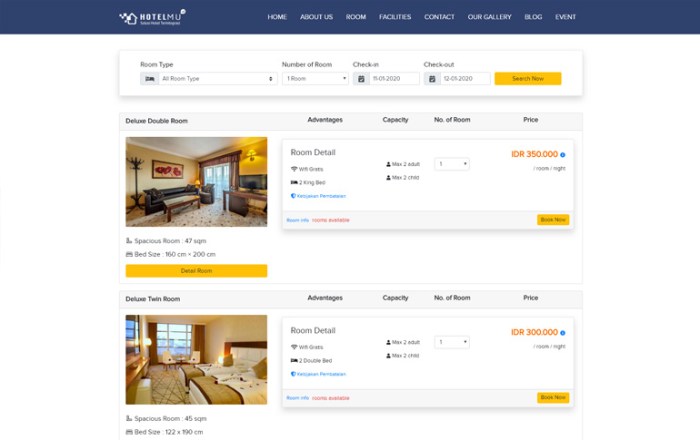
Booking a hotel through a discount website is generally a straightforward process, but the specific steps and user experience can vary depending on the platform. Understanding this process is key to maximizing the benefits of these sites and finding the best deals. Efficiency and ease of use are paramount for a positive user experience.
The typical booking process involves several key stages, all designed to guide the user towards a successful reservation. These stages often involve a combination of search filters, result browsing, detailed information pages, and secure payment gateways. A smooth and intuitive interface is critical for a positive user experience, encouraging users to complete the booking and return for future travel needs.
Typical Booking Steps
The typical steps involved in booking a hotel via a discount website are as follows:
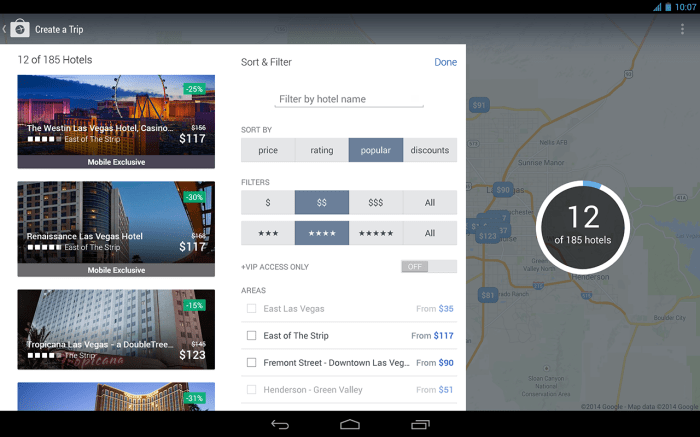
- Search and Filtering: Users begin by entering their desired destination, travel dates, and the number of guests. Advanced filters often allow for further refinement based on price range, hotel star rating, amenities (e.g., free Wi-Fi, swimming pool), and guest reviews.
- Results Display: The website displays a list of hotels matching the search criteria, typically showing a thumbnail image, hotel name, price, and a brief description. Results are often sortable by price, rating, or popularity.
- Hotel Selection and Details: Clicking on a hotel listing leads to a detailed page providing more information, including photos, amenities, guest reviews, and a map showing the hotel’s location. Users can compare multiple hotels before making a decision.
- Room Selection: Once a hotel is chosen, users select the desired room type and number of rooms. This step often displays available room options with their corresponding prices and features.
- Guest Information and Payment: Users then provide their personal information, including name, address, contact details, and payment information. Secure payment gateways ensure the safety of financial transactions.
- Booking Confirmation: Upon successful payment, the website generates a booking confirmation, usually sent via email and displayed on the screen. This confirmation contains essential details like booking reference number, hotel information, and reservation dates.
User Interface and Navigation
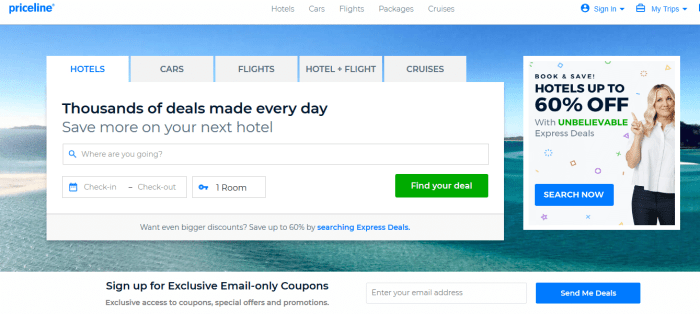
Popular discount hotel sites prioritize user-friendliness through intuitive interfaces and clear navigation. Design elements like clear search bars, easy-to-understand filters, high-quality images, and prominent call-to-actions are common features. Many sites utilize a responsive design, adapting seamlessly to different screen sizes (desktops, tablets, and smartphones). Navigation is typically straightforward, with clear pathways to access essential information and complete the booking process. For example, sites like Expedia and Booking.com are known for their user-friendly design and easy navigation. They effectively use visual cues and clear labeling to guide users through the booking process.
User Flow Diagram
Imagine a diagram showing a flowchart. The process starts with a “Search for Hotels” box, leading to a “Hotel Results” box. From there, an arrow points to “Select Hotel,” followed by “Choose Room,” then “Enter Guest Details,” and finally “Payment & Confirmation.” Each box represents a step in the process, and the arrows indicate the flow. The diagram visually represents the steps Artikeld above, demonstrating the clear and linear progression of the booking process on a typical discount hotel website. The diagram would clearly show the branching paths users might take, such as selecting different filters or choosing to compare multiple hotels. The final box would show the confirmation page, indicating successful booking.
Pricing Strategies and Deals

Source: tiket.photos
Discount hotel websites employ a variety of pricing strategies to attract customers and maximize revenue. These strategies often involve dynamic pricing, adjusting prices based on demand, seasonality, and other factors. Understanding these strategies is key to finding the best deals.
Several pricing models are commonly used. Last-minute deals capitalize on unsold inventory by offering deeply discounted rates close to the check-in date. Package deals bundle hotel stays with other services, such as flights or rental cars, often resulting in a lower overall cost. Member discounts reward loyalty by offering exclusive rates to registered users. Other strategies include early bird discounts for booking well in advance and flash sales offering limited-time, heavily discounted rates.
Comparison of Pricing Strategies Across Three Major Sites
Let’s compare the pricing strategies of three major discount hotel booking sites: Expedia, Booking.com, and Hotels.com. While specific deals fluctuate constantly, we can examine their general approaches.
Expedia often features a mix of last-minute deals and package deals, particularly highlighting flight and hotel bundles. They also have a rewards program offering points for every booking, which can be redeemed for future discounts. Booking.com emphasizes its “Genius” program for frequent users, offering perks such as free breakfast and room upgrades. They also frequently highlight deals based on user search history and location. Hotels.com is well-known for its “Rewards” program, where after 10 stays, you get one night free. All three sites use dynamic pricing, meaning prices adjust based on demand and other factors.
Examples of Discounts and Eligibility Conditions
Several types of discounts are commonly offered. Understanding the conditions for eligibility is crucial for securing the best deal.
- Last-minute deals: These discounts are applied to rooms with imminent check-in dates (typically within 24-72 hours). Eligibility is simply having flexibility in your travel dates and booking close to your stay.
- Package deals: These combine hotel stays with flights, car rentals, or other services. Eligibility involves booking all components of the package through the website. The discount is usually applied to the total package price.
- Member discounts: These are exclusive to registered users of the website or loyalty program members. Eligibility requires creating an account and sometimes meeting specific criteria, such as a minimum number of past bookings.
- Early bird discounts: These are offered for bookings made well in advance of the stay. Eligibility requires booking your hotel stay significantly ahead of your travel dates, often weeks or months prior.
- Flash sales: These are short-term, heavily discounted offers, often with limited availability. Eligibility requires being aware of the sale and booking within the specified timeframe.
Customer Reviews and Ratings

Source: jwplayer.com
Customer reviews and ratings are crucial for discount hotel booking sites. They act as a powerful social proof mechanism, influencing potential customers’ decisions and directly impacting a hotel’s visibility and booking rates. Positive reviews build trust and encourage bookings, while negative reviews can deter potential guests and necessitate improvements from the hotel. Understanding this dynamic is vital for both the booking platforms and the hotels themselves.
The impact of customer reviews extends beyond simply influencing individual bookings. Discount hotel sites actively use aggregated feedback to improve their services and offerings. Analyzing trends in reviews allows them to identify areas needing improvement, whether it’s related to the booking process, the accuracy of hotel descriptions, or the responsiveness of customer service. For example, a consistently negative trend regarding late check-in procedures might prompt the site to improve its communication with hotels and potentially filter hotels based on their check-in efficiency. This data-driven approach allows for continuous improvement and enhanced user experience.
The Influence of Customer Reviews on Booking Decisions
Customer reviews significantly impact booking decisions on discount hotel sites. Potential guests often prioritize reviews when comparing different hotels. Positive reviews, particularly those detailing specific positive experiences (e.g., “The staff was incredibly helpful,” or “The breakfast was amazing!”), are more likely to sway a decision towards booking. Conversely, negative reviews highlighting significant issues (e.g., “The room was dirty,” or “The hotel was noisy”) can deter bookings. The sheer number of reviews also matters; a hotel with many positive reviews generally inspires more confidence than one with few, even if the average rating is similar. This is because a larger number of reviews suggests a broader range of experiences have been reflected, providing a more comprehensive picture.
Website Utilization of Customer Feedback for Improvement
Discount hotel websites employ sophisticated systems to collect, analyze, and act upon customer feedback. This involves more than simply displaying star ratings. They use natural language processing (NLP) techniques to analyze the text of reviews, identifying recurring themes and sentiments. For instance, if many reviews mention slow Wi-Fi, the site might contact the hotel to address the issue or flag the Wi-Fi speed in their hotel descriptions. They might also use review data to refine their search algorithms, prioritizing hotels with consistently high ratings and addressing specific customer preferences (e.g., showing family-friendly hotels higher in searches for families). This continuous feedback loop helps improve the overall quality of service and the accuracy of information presented on the site.
Best Practices for Writing Helpful and Trustworthy Customer Reviews
Writing helpful and trustworthy reviews is crucial for maintaining the integrity of the review system. To contribute meaningfully, reviewers should focus on providing specific details and factual information. A review stating simply “Great hotel!” is less helpful than one that says, “The hotel was conveniently located near the train station, the staff were friendly and efficient, and the breakfast buffet had a wide variety of options.”
To ensure trustworthiness, reviews should reflect the reviewer’s genuine experience. Avoid exaggerating positive aspects or unfairly criticizing minor inconveniences. It’s also important to be objective and avoid personal attacks or irrelevant information. Focusing on specific aspects of the hotel, such as cleanliness, comfort, service, and amenities, provides valuable information for other potential guests. Finally, it is beneficial to mention both positive and negative experiences honestly, as this contributes to a more balanced and realistic assessment.
Security and Trust

Source: itilite.com
Booking a hotel online, especially through a discount site, involves sharing sensitive personal and financial information. Therefore, understanding the security measures in place is crucial for building trust and ensuring a safe booking experience. Reputable sites prioritize security to protect user data and maintain a positive reputation.
Security measures employed by reputable discount hotel booking sites are multifaceted. They range from robust encryption protocols to multi-layered authentication systems and strict data privacy policies. These measures aim to prevent unauthorized access, data breaches, and fraudulent activities.
Data Encryption and Secure Payment Gateways
Secure payment gateways and data encryption are fundamental to building user trust. Data encryption, using protocols like SSL/TLS, scrambles sensitive information during transmission, making it unreadable to unauthorized individuals. Secure payment gateways, like those offered by PayPal or Stripe, process transactions in a secure environment, adhering to industry standards like PCI DSS (Payment Card Industry Data Security Standard). This ensures that credit card numbers and other financial details are protected from interception and misuse. For example, a site might use 256-bit encryption, a highly secure standard, to protect all data transmitted between the user’s browser and the booking site’s servers. This level of encryption makes it extremely difficult for hackers to decipher the information.
Comparison of Security Protocols: Expedia vs. Booking.com
Expedia and Booking.com are two of the largest online travel agencies. Both employ robust security measures, but their specific implementations may differ slightly. Both utilize SSL/TLS encryption to protect data transmitted between the user and their servers. Both also have comprehensive security policies detailing their data protection measures and user responsibilities. However, the specific technologies used for authentication, fraud detection, and data storage might vary. For instance, one site might employ a more advanced form of multi-factor authentication compared to the other, adding an extra layer of security. A detailed comparison would require accessing and analyzing their respective security documentation, which is beyond the scope of this overview. The key takeaway is that both are generally considered reputable and employ industry-standard security practices.
Importance of Transparency and Security Policies
The availability of clear and accessible security and privacy policies is vital for building trust. These policies should clearly Artikel how user data is collected, used, protected, and shared. Transparency about data encryption methods, security certifications (like ISO 27001), and data breach response protocols instill confidence in users. Reputable sites actively publish these policies and make them easily accessible to users. A lack of transparency or vague security statements can raise concerns about a site’s commitment to user data protection. Users should always review a site’s security and privacy policies before providing any personal or financial information.
Impact on the Hotel Industry

Source: tiket.photos
Discount hotel booking sites have profoundly reshaped the hotel industry, creating both opportunities and challenges for hotels of all sizes. Their impact is most clearly seen in the areas of pricing, competition, and overall distribution strategies. The rise of these platforms has forced hotels to adapt and innovate to remain competitive in a rapidly evolving market.
The most immediate impact is on pricing. The transparency offered by these sites forces hotels to be more competitive with their rates. Hotels are constantly monitoring competitor prices on these platforms, leading to a more dynamic and often lower pricing environment for consumers. This pressure to offer competitive prices has also driven innovation in hotel pricing strategies, with many hotels employing revenue management systems to optimize pricing based on demand and other factors.
Hotel Adaptation Strategies, Discount hotel sites
Facing increased competition and pressure on pricing, hotels have adopted several strategies to leverage the benefits of online travel agencies (OTAs) while mitigating the drawbacks. Many hotels now actively manage their online presence on these platforms, carefully monitoring their reviews and responding to guest feedback. They also use these platforms’ data analytics to better understand customer preferences and tailor their services accordingly. Some hotels have invested in improving their direct booking channels to encourage customers to bypass OTAs altogether, offering exclusive deals and loyalty programs. Others have partnered strategically with specific OTAs to gain preferential placement and marketing opportunities. For example, a boutique hotel might prioritize a partnership with an OTA known for attracting luxury travelers, while a budget hotel might focus on a platform popular with budget-conscious consumers.
Benefits and Drawbacks of Discount Hotel Websites for Hotels
The impact of discount hotel websites on hotels is multifaceted, presenting both advantages and disadvantages. It’s crucial for hotels to understand this duality to effectively manage their online presence and maximize profitability.
- Benefits: Increased visibility and reach to a wider customer base; access to valuable customer data and analytics; potential for increased occupancy rates, especially during off-peak seasons; reduced marketing and distribution costs compared to traditional methods; the ability to target specific customer segments through partnerships with particular OTAs.
- Drawbacks: Commission fees paid to OTAs can significantly reduce profit margins; dependence on third-party platforms creates vulnerability to changes in OTA policies and algorithms; potential for negative reviews to impact reputation; loss of direct customer relationship and control over pricing and branding; competition from other hotels listed on the same platform.
Future Trends
Source: eflyto.com
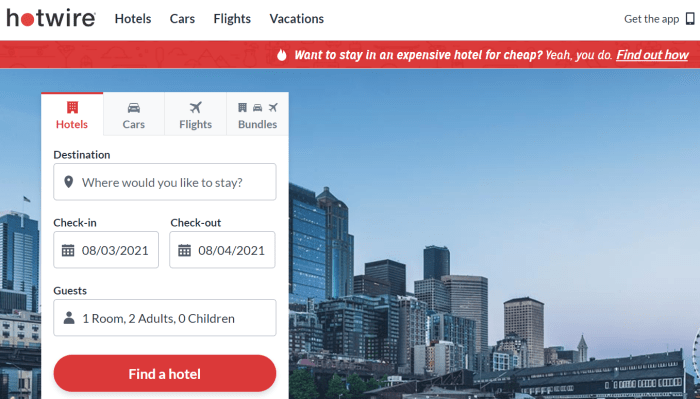
The discount hotel booking industry is poised for significant change, driven by technological advancements and evolving consumer preferences. We can expect to see a continued shift towards mobile-first booking, personalized experiences, and the increasing integration of artificial intelligence (AI) and machine learning (ML) across all aspects of the booking process. The focus will remain on providing seamless, transparent, and cost-effective solutions for travelers.
The next few years will see a dramatic reshaping of the landscape, with several key factors influencing the future of discount hotel bookings.
Artificial Intelligence and Machine Learning in Hotel Bookings
AI and ML are already transforming the way users interact with travel platforms. These technologies are enhancing the booking experience by offering highly personalized recommendations, predicting pricing fluctuations, and streamlining the overall process. For example, AI-powered chatbots can provide instant customer support, answer frequently asked questions, and even assist with booking modifications. Machine learning algorithms analyze vast amounts of data – user preferences, past bookings, real-time availability, and pricing trends – to deliver highly targeted offers and predict the likelihood of a user making a booking, optimizing marketing campaigns and improving conversion rates. Imagine a system that anticipates your travel needs based on your past behavior and proactively suggests suitable hotels before you even start searching. This proactive approach would significantly improve user experience and enhance the efficiency of the booking process.
Innovative Feature: AI-Powered “Dream Trip” Planner
A hypothetical innovative feature for a discount hotel booking website could be an AI-powered “Dream Trip” planner. This feature would go beyond simple search functionality. Users would input their desired travel dates, budget, and a general description of their ideal vacation (e.g., “relaxing beach getaway,” “adventure-filled backpacking trip”). The AI would then analyze this information, cross-referencing it with vast datasets of hotels, activities, and attractions, to generate a personalized itinerary, including hotel recommendations, flight suggestions (if applicable), and potential activities. The system would factor in user preferences (e.g., preferred hotel amenities, activity types) and historical data to create an optimal and cost-effective travel plan. The benefit is a highly personalized and efficient travel planning experience, potentially leading to increased user engagement and booking conversions. The AI could even learn from user feedback to continuously improve its suggestions and offer increasingly refined travel plans over time. This would transform the user experience from a simple booking process to a fully integrated travel planning tool.
Summary
Source: tiket.photos
Finding the perfect hotel at the perfect price is a dream for many travelers. By understanding the landscape of discount hotel sites, you can significantly increase your chances of finding amazing deals. Remember to compare prices across multiple sites, read reviews carefully, and prioritize secure booking platforms. With a little research and the right strategy, you can unlock incredible savings on your next adventure, making your travel dreams a reality without breaking the bank. Happy travels!