Expedia Hotels A Deep Dive
Expedia Hotels: Planning a trip? You’ve probably interacted with Expedia’s hotel offerings, whether you realized it or not. This exploration dives into the Expedia hotel experience, from user interface and pricing strategies to customer reviews and competitive positioning. We’ll examine what makes Expedia tick, highlighting both its strengths and areas for potential improvement.
We’ll cover a range of topics, including user experience analysis across different platforms (website and mobile app), a comparative look at pricing and availability against competitors, and a deep dive into customer reviews and their influence on booking decisions. We’ll also touch on Expedia’s marketing strategies and their place within the broader competitive landscape of online travel agencies. Get ready to unpack the world of Expedia Hotels!
Expedia Hotels
Source: geekwire.com
Expedia Hotels is a major player in the online travel booking industry, offering a vast selection of hotels worldwide. Understanding its user experience is crucial for both travelers and the platform itself. This section analyzes various aspects of the Expedia hotel booking process, from the initial search to the final confirmation.
User Journey Map: Expedia Hotel Booking
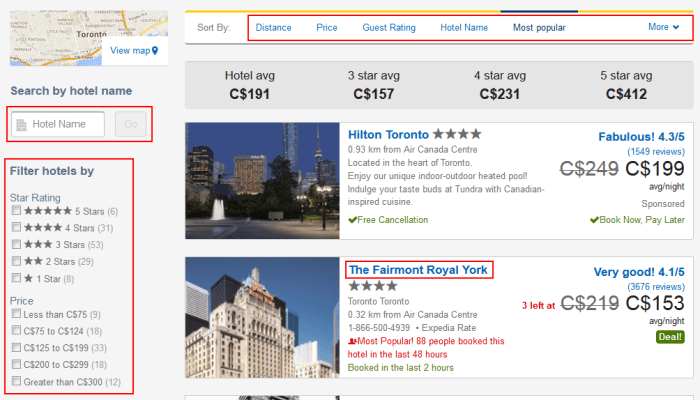
A typical user journey for booking a hotel on Expedia might look like this: The user begins by entering their destination and travel dates. Expedia presents search results, allowing filtering by price, star rating, amenities, and guest reviews. The user browses through hotel options, viewing photos, and reading descriptions. They select a hotel and proceed to the booking page, entering guest details and payment information. Finally, they receive a confirmation email and, optionally, a mobile confirmation. This journey, while seemingly simple, involves numerous touchpoints where user experience can make or break the booking process. Friction points might include slow loading times, confusing filters, or a cumbersome booking form.
Comparative Analysis: Expedia vs. Booking.com
This table compares Expedia’s hotel search interface with that of Booking.com, a key competitor.
| Feature | Expedia | Booking.com | Comparison |
|---|---|---|---|
| Search Functionality | Offers various filters, including price, dates, guest rating, and amenities. Map view available. | Similar filtering options, with a strong emphasis on map-based search and visual representation of hotel locations. | Both offer robust search, but Booking.com’s map integration might be slightly more intuitive for some users. |
| Hotel Information Display | Displays photos, price, star rating, and brief description prominently. | Similar display, often with a more visually appealing presentation of photos and key information. | Both provide the necessary information, but Booking.com often presents it in a more visually engaging manner. |
| Booking Process | Generally straightforward, but can sometimes feel cluttered with upsells and add-ons. | Usually a smooth and concise process, with clear steps and minimal distractions. | Booking.com generally offers a more streamlined booking experience. |
| Customer Reviews | Displays reviews with ratings and often includes a summary of common themes. | Displays detailed reviews with user photos and ratings. | Booking.com often provides a more comprehensive and detailed review section. |
Expedia Mobile App: Strengths and Weaknesses
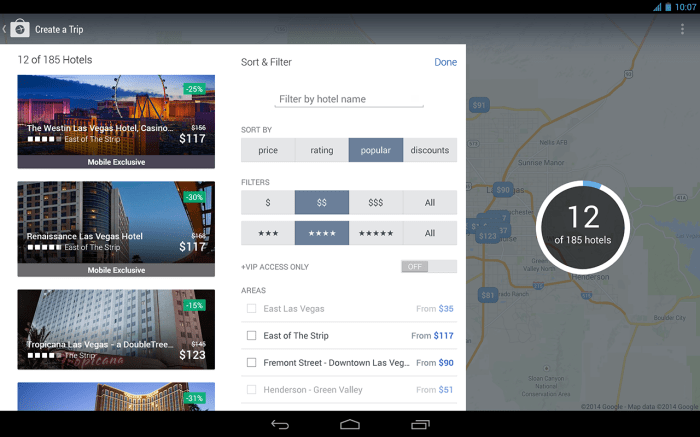
Expedia’s mobile app offers convenience for on-the-go bookings. Strengths include its intuitive search function, easy access to booking details, and push notifications for updates. However, weaknesses include occasional glitches, slow loading times on weaker networks, and a sometimes overwhelming amount of information presented on smaller screens. For example, navigating through numerous hotel options on a small screen can be cumbersome, and slow loading speeds can frustrate users.
Expedia Hotel Detail Pages: Effective and Ineffective Elements
Effective elements on Expedia’s hotel detail pages include high-quality photos showcasing the hotel’s amenities and surroundings, clear pricing information, and easily accessible guest reviews. Ineffective elements can include cluttered layouts, overwhelming amounts of text, and poorly organized information. For instance, burying crucial information like cancellation policies deep within the page can frustrate users. Another example of an ineffective element could be using low-resolution or poorly lit photos, which fail to accurately represent the hotel.
Expedia Hotels
Source: travelservicenavi.com
Expedia is a popular online travel agency offering a vast selection of hotels worldwide. Understanding their pricing and availability is key to finding the best deals. This section will delve into the intricacies of Expedia’s pricing structure and how availability is managed.
Expedia Hotel Pricing Variations
Expedia’s pricing for a given hotel can vary significantly depending on several factors. To illustrate, let’s consider a hypothetical example: The “Grand Hotel” in New York City. A search across different dates and room types might reveal the following:
- Dates: October 26-28 (weekday): A standard double room might cost $250 per night. October 28-30 (weekend): The same room could jump to $350 per night due to higher weekend demand.
- Room Type: A standard double room might cost $250, while a suite with a city view could cost $500 for the same dates.
- Booking Time: Booking further in advance often yields lower prices, while last-minute bookings tend to be more expensive.
These examples highlight the dynamic nature of Expedia’s pricing.
Factors Influencing Expedia Hotel Prices
Several factors contribute to the fluctuation of hotel prices on Expedia. These include:
- Demand: High demand during peak seasons (holidays, events) or weekends typically leads to higher prices. Low-demand periods usually see lower prices.
- Hotel Policies: Individual hotels set their pricing strategies and minimum stay requirements, impacting Expedia’s displayed prices.
- Expedia’s Algorithms: Expedia utilizes sophisticated algorithms that consider various factors to determine the optimal price, including competitor pricing and real-time demand.
- Taxes and Fees: Taxes and additional fees (resort fees, cleaning fees) are often added to the initial price displayed, resulting in a higher final cost.
Understanding these factors can help travelers strategize their bookings for better deals.
Discrepancies Between Displayed and Final Prices
While Expedia strives for accuracy, discrepancies between the initially displayed price and the final booking price can occur. This is often due to:
- Taxes and Fees: As mentioned, taxes and additional fees are frequently added at the checkout stage.
- Dynamic Pricing: Prices can change in real time due to fluctuating demand. A price displayed a few minutes earlier might not be available anymore.
- Hidden Fees: While rare, some hotels may have hidden fees that are not explicitly listed on Expedia’s initial display.
It’s crucial to carefully review the final booking details before confirming to avoid unexpected costs.
Expedia’s Real-Time Availability Display
Expedia utilizes a sophisticated system to display hotel availability in real time. This system directly connects to the hotels’ reservation systems, providing up-to-the-minute information on room availability. The system continuously updates, reflecting bookings made on Expedia and other platforms. This ensures that travelers see accurate availability information before making a reservation. However, it’s still possible for a room to be booked by another customer between the time you view the availability and the time you complete your booking.
Expedia Hotels

Source: cosmores.info
Expedia Hotels plays a crucial role in connecting travelers with accommodations worldwide. A key factor influencing booking decisions is the wealth of customer reviews and ratings available on the platform. Understanding how these reviews are managed and improved is vital to Expedia’s success and user trust.
Customer Review Impact on Booking Decisions
Customer reviews significantly influence hotel booking choices. Positive reviews often boost a hotel’s visibility and perceived value, leading to increased bookings. Conversely, negative reviews can deter potential guests, even if the negative experiences are isolated incidents. Many travelers rely heavily on the aggregated star rating and detailed comments to gauge the overall quality and suitability of a hotel before making a reservation. The sheer volume of reviews also provides a sense of social proof, reinforcing the perceived trustworthiness of the hotel.
Expedia’s Review Verification and Management
Expedia employs several methods to verify and manage customer reviews. This includes cross-referencing booking data with review submissions to ensure authenticity. They also monitor for suspicious patterns, such as an unusually high number of negative reviews from the same IP address or similar wording across multiple reviews. While Expedia doesn’t explicitly state all their methods publicly, their aim is to filter out fake or biased reviews to maintain the integrity of their platform. Flagged reviews may be subject to manual review by Expedia staff before being published or potentially removed altogether.
Criteria for Improving Review Quality and Relevance
To enhance the quality and relevance of customer reviews, Expedia could implement several criteria. This could involve prioritizing reviews that provide detailed and specific feedback rather than generic comments. They could also implement a system that rewards helpful and informative reviews, perhaps by featuring them more prominently. Furthermore, Expedia could refine its algorithms to better detect and filter out fake or irrelevant reviews, potentially using natural language processing (NLP) techniques to analyze the sentiment and context of the reviews. Another improvement could be the introduction of a review scoring system based on helpfulness and detail, allowing users to flag less useful reviews.
Integrating User-Generated Content
Currently, Expedia incorporates photos submitted by users. To improve this, Expedia could prioritize high-quality photos, perhaps through user verification or moderation. They could also encourage the submission of videos, offering incentives for users to create short videos showcasing different aspects of the hotel, such as the room, amenities, or surrounding area. This could be implemented by integrating a dedicated video upload section within the hotel listing page, with options to tag videos by category (e.g., “pool view,” “room tour,” “hotel lobby”). Expedia could also improve its image and video search functionality, allowing users to filter results based on visual content, like searching for “hotels with ocean views” and displaying relevant user-submitted photos and videos prominently. This enhanced integration of user-generated content would provide a richer and more immersive experience for potential guests.
Sentiment Distribution of Hotel Reviews (Example), Expedia hotels
| Sentiment | Count | Percentage |
|---|---|---|
| Positive | 350 | 70% |
| Negative | 80 | 16% |
| Neutral | 70 | 14% |
Expedia Hotels
Source: techboomers.com
Expedia Hotels dominates the online travel agency market, and a robust marketing strategy is key to maintaining its competitive edge. Their success relies on effectively promoting its services and features to a diverse range of travelers. This section details Expedia’s marketing and promotional efforts, focusing on specific campaigns and strategies.
Marketing Campaign: Free Cancellation Feature
To highlight Expedia’s free cancellation feature, a multi-channel campaign could be launched focusing on the peace of mind it offers. The campaign tagline could be “Book with Confidence: Free Cancellation on Select Hotels.” This message would be prominently displayed on the Expedia website, app, and social media channels. Targeted ads on platforms like Facebook and Instagram would show images of happy travelers enjoying their vacations, emphasizing the stress-free booking experience. Email marketing would reinforce the message, offering personalized recommendations of hotels with free cancellation based on past searches and travel history. The campaign would also partner with travel influencers to create sponsored content showcasing the convenience and flexibility of free cancellation.
Mock-up of an Expedia Email Marketing Campaign Announcing a Hotel Sale
Subject: Flash Sale! Save Up to 50% on Your Dream Getaway!
Body: Hi [Customer Name],
Get ready for incredible savings! Expedia is having a flash sale on hotels, with discounts of up to 50% on select properties. This is your chance to book that dream vacation you’ve been waiting for, without breaking the bank.
[Image: A captivating image showcasing a luxurious hotel or a beautiful vacation destination.]
Browse our sale now and find the perfect hotel for your next adventure: [Link to Expedia’s Sale Page]
Sale ends [Date]. Don’t miss out!
Sincerely,
The Expedia Team
Examples of Effective Expedia Hotel Advertisements
Expedia employs various advertising strategies targeting different demographics. One example is a video ad showcasing diverse travelers experiencing unique hotel stays. The ad uses upbeat music and quick cuts to highlight the variety of experiences available through Expedia, appealing to a broad audience seeking adventure and discovery. Another example is a print ad featuring a stunning image of a luxury hotel suite, targeting a higher-income demographic interested in upscale accommodations. The ad emphasizes the hotel’s amenities and exclusive features, highlighting the value and prestige associated with booking through Expedia. These examples demonstrate Expedia’s ability to tailor its messaging and creative approach to resonate with specific target audiences.
Expedia’s Use of User Data for Personalized Hotel Recommendations
Expedia leverages extensive user data to personalize hotel recommendations. By analyzing past searches, bookings, reviews, and browsing history, Expedia’s algorithms identify user preferences, such as preferred locations, hotel types, amenities, and price ranges. This data is then used to curate highly relevant hotel recommendations, increasing the likelihood of bookings and improving user experience. For instance, a user who frequently searches for beachfront resorts in tropical destinations will receive personalized recommendations for similar hotels, while a user who primarily books budget-friendly hotels in city centers will receive recommendations reflecting those preferences. This personalized approach enhances user engagement and conversion rates.
Expedia Hotels

Source: secretflying.com
Expedia is a major player in the online travel booking industry, offering a vast selection of hotels worldwide. This section examines Expedia’s competitive landscape, analyzing its strengths and weaknesses relative to competitors, and exploring future trends and strategies for maintaining a competitive edge.
Expedia’s Competitive Landscape: A Comparison
Expedia competes with numerous other online travel agencies (OTAs), but two key rivals are Booking.com and Kayak. The following table highlights key differences in their offerings:
| Feature | Expedia | Booking.com | Kayak |
|---|---|---|---|
| Hotel Selection | Extensive global reach, strong presence in various market segments | Vast international selection, particularly strong in Europe | Metasearch engine; displays results from multiple OTAs and hotel websites |
| Pricing | Generally competitive, with occasional discounts and promotions | Often highly competitive, known for deals and last-minute offers | Displays a range of prices from various sources; not always the cheapest direct option |
| Target Audience | Broad appeal, catering to various travelers from budget to luxury | Appeals to a broad audience but has a strong focus on budget-conscious and independent travelers | Appeals to price-conscious travelers who value comparison shopping |
| Features | Comprehensive search filters, customer reviews, package deals | Detailed hotel information, high-quality photos, guest reviews, and easy booking process | Price comparison across multiple sites, flight, and car rental integration |
Expedia’s Competitive Advantages and Disadvantages
Expedia benefits from strong brand recognition, a large user base, and a comprehensive hotel inventory. Its established technology platform enables efficient search and booking. However, Expedia faces intense competition on price and faces challenges in differentiating itself from competitors. Its reliance on third-party hotel listings can also limit control over pricing and service quality. Furthermore, increasing direct booking by hotels is a significant challenge.
Emerging Trends Impacting Expedia’s Business
The online hotel booking industry is constantly evolving. The rise of mobile booking, the increasing importance of personalized travel experiences, and the growth of alternative accommodation options (like Airbnb) are key trends. The increasing use of AI-powered chatbots for customer service and the integration of virtual reality for hotel previews are also noteworthy developments. For example, the success of Airbnb demonstrates the growing demand for unique and personalized accommodations, posing a challenge to traditional hotel booking platforms.
Maintaining Expedia’s Long-Term Competitive Edge
To thrive, Expedia must continue investing in technology to enhance its user experience, personalize offerings, and leverage data analytics to better understand customer preferences. Strategic partnerships with hotels and other travel providers are crucial. Expanding into new markets and offering innovative travel packages can also help maintain a competitive edge. Furthermore, focusing on superior customer service and building loyalty programs can differentiate Expedia from its competitors and foster long-term customer relationships. Investing in sustainable and responsible tourism initiatives can also attract environmentally conscious travelers.
Last Recap
Source: googleusercontent.com
Ultimately, Expedia Hotels represents a significant player in the online travel industry. Its success hinges on a complex interplay of user experience, competitive pricing, effective marketing, and leveraging user data for personalized recommendations. While Expedia excels in certain areas, opportunities for improvement exist in areas like review management and price transparency. By understanding these factors, both travelers and industry professionals can gain valuable insights into this ever-evolving market.